Formula 1 drivers are to face the highest minimum front tyre pressures of the 2026 season - and the highest ever stipulated at the start of a race weekend - at the Qatar Grand Prix.
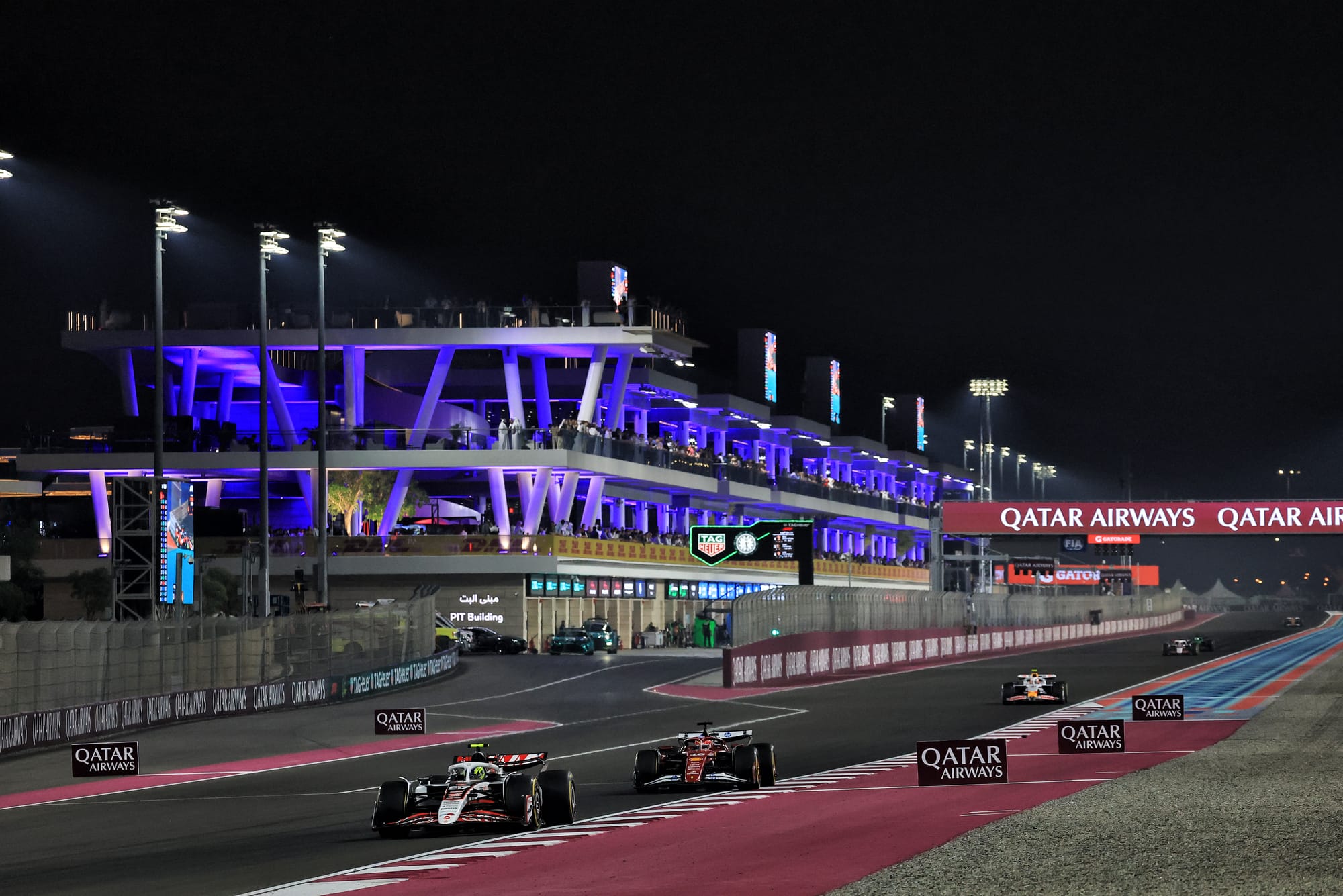
The unique characteristics of the Lusail circuit, which features sequences of high-speed corners and aggressive pyramid-style kerbs, makes it one of the most challenging for tyres.
It is one of the highest lateral-energy circuits of the season, with the bias of fast right handers meaning the front left is punished particularly hard.
Pirelli has historically used three techniques to minimise the risk of tyre failures in Qatar: bringing its hardest compounds, increasing the minimum pressures, and imposing maximum stint lengths so each set is not taken right to the end of its life.
This year, all three responses have been taken again, with pressures nudged up compared to last year.
In the official FIA notes sent to teams ahead of the Qatar weekend, the front minimum tyre pressure is set at 29psi, while the rears have been set at 27.5psi.
For the fronts this is the highest of the year, with the previous benchmark having been set at 28psi – which was laid down at Suzuka, Silverstone and Spa.
For the rears, the Qatar number is four psi higher than the pre-weekend stipulation last year but not a peak for 2026. Spa and Las Vegas were both at 28.0 psi.
At the 2025 Qatar GP, Pirelli headed into the weekend with a minimum front pressure of 28psi but then lifted it to 29psi when it discovered cuts in the rubber after Friday running – which it believed had been caused by cars running over gravel that had been pulled onto the track.
The possibility of a similar in-weekend response being needed this time around cannot be ruled out, especially because the behaviour of the 2026 cars with active aero will only become clear once track action has got underway.
One of the reasons minimum tyre pressures have gone up this season is because Pirelli has had to counter the risks of straight mode failures – which would have the consequence of putting huge forces through tyres on the straights.
This has made a notable difference with the minimum pressures at the rear being lifted and it is no different in Qatar with last year's baseline of 23.5psi (lifted to 24.5psi after Friday) now being set at 27.5psi.
The challenge of Qatar is so high that one option for Pirelli to be satisfied that safety margins are big enough would be to lift the minimum pressures much higher.
However, this is not something drivers and teams are keen on – with complaints having already surfaced this year about how high pressures have generally ended up.
So that is why, despite a more robust construction of slick tyre this year, plus downforce levels generally being less, Pirelli has elected to impose a maximum stint length for tyres once again.
This has been set at 27 laps for a set of tyres – which is two more than was put in place last year.
The nature of the track and the tyre limits make things far from straightforward for teams, according to Williams chief trackside engineer Paul Williams.
For qualifying he said: "The soft is not a clear first-timed-lap tyre. The front-right struggles to warm up while the front-left and rear-left overheat through the lap, so we expect a hard out-lap for warm-up and a double cool-down lap to reset the rear temperatures."
Then, for the race itself, he explained: "The front-left will be the limit, first through overheating and then through wear, while rear wear is relatively low. The soft carries a front-left graining risk and the medium is still expected to see high wear."
The likelihood is that the medium and hard will be the preferred race tyres, with the minimum two-stop race meaning the main strategy challenge is making sure that the final stops do not come too early that a costly extra change is created.
McLaren's associate director of car race engineering Adrian Goodwin said: "The fixed stint lengths actually make it a simpler event for tyres, as we're not trying to manage them beyond end of life.
"The main strategic point is not stopping so early that you're forced into a three-stop race."